



The Innovation Ecosystem is strategically structured to cultivate creativity, innovation, and entrepreneurial leadership among students. It functions as a dynamic platform that blends academic rigor with practical exposure, enabling students to transform innovative ideas into sustainable business ventures and impactful solutions. The ecosystem fosters a culture of experimentation, critical thinking, and problem-solving, preparing students to thrive in competitive and evolving business environments.
Email: cipr@dme.ac.in
Email: d.khatwani@dme.ac.in
The Business Plan (B-Plan) Competition organized under the Entrepreneurship Cell serves as a flagship initiative to promote entrepreneurial thinking, innovation, and practical business acumen among students. The competition provides a structured platform for students to conceptualize, develop, and present viable business ideas addressing real-world market needs and societal challenges. The primary objective of the B-Plan Competition is to encourage students to convert innovative ideas into structured business models supported by market research, financial feasibility, operational planning, and strategic positioning. The competition is open to students from all three years, either individually or in teams, fostering interdisciplinary collaboration and peer learning. The competition is conducted in multiple stages to ensure systematic evaluation and mentoring. The first stage involves submission of an executive summary outlining the problem statement, proposed solution, target market, unique value proposition, and revenue model. Shortlisted teams proceed to the second stage, where they prepare a detailed business plan including market analysis, competitor analysis, marketing strategy, operational framework, financial projections, break-even analysis, and risk assessment. Mentorship sessions are organized between stages, wherein faculty members and industry experts guide participants in refining their ideas, validating assumptions, and strengthening financial and strategic components. The final stage consists of a live pitching round before a panel of judges comprising entrepreneurs, startup mentors, investors, and academicians. Teams present their business model within a stipulated time followed by a question-and-answer session to assess clarity, feasibility, innovation, scalability, and sustainability. Evaluation criteria typically include innovation and originality, market potential, financial viability, scalability, social impact, risk assessment, and presentation effectiveness. Winners are awarded certificates, trophies, and recognition, while promising ideas may receive incubation guidance or mentorship support for further development. The B-Plan Competition not only enhances entrepreneurial competencies such as leadership, decision-making, analytical thinking, and communication skills but also strengthens students’ confidence in presenting ideas before professional panels. It plays a significant role in nurturing a startup-oriented culture within the institution and contributes to building an innovation-drivenacademic environment.
| S. No. | Academic Year | Name of the Students | Program & Year | Event/Competition Name | Level | Position Secured | Title of Idea/Startup |
|---|---|---|---|---|---|---|---|
| 1 | 2024-2025 | Khushi Sachdeva, Palak Patwal, Kartikey Joshi and Raman Kumar | BBA 2024 | B-Plan Competition | National (IIMB) | III | EcoBlendBricks |
| 2 | 2024-2025 | — | BBA 2024 | B-Plan Competition | Inter (DME) | I | Youthful Yonders |
| 3 | 2025-2026 | Zama Kaur, Hemakshi Kumar, Shubhi Gupta and Ridhi Pandey | BBA 2025 | B-Plan Competition | Inter (DME) | I | Releaf Notebook |
| 4 | 2025-2026 | Vasu Jain, Divyansh Jain, Gourav Sharma, Lavanya Sharma & Harshvardhan Tiwari | BBA 2025 | B-Plan Competition | Inter (DME) | I | Golden Hooks |
The Incubation Center at DME Management School serves as a dedicated platform to support aspiring student entrepreneurs in transforming innovative ideas into viable and scalable business ventures. It functions as an integral part of the institution’s Innovation Ecosystem, providing structured guidance, mentorship, and strategic support at various stages of startup development. The primary objective of the Incubation Center is to nurture early-stage ideas by offering a supportive environment that encourages experimentation, research, and practical execution. Students with promising business concepts are guided through idea validation, market research, business model development, financial planning, and prototype creation. The center promotes a systematic approach to venture building by assisting students in conducting feasibility analysis, identifying target markets, and understanding competitive positioning. The Incubation Center facilitates mentorship from faculty members, industry experts, startup founders, and alumni entrepreneurs. Regular review meetings and progress evaluations ensure continuous monitoring and constructive feedback. Students also receive guidance in preparing pitch decks, financial projections, and investor presentations to enhance their readiness for funding opportunities. In addition to mentorship, the center encourages participation in startup competitions, innovation challenges, and external incubation programs. It supports networking opportunities with investors, industry professionals, and ecosystem enablers, thereby strengthening industry-academia collaboration. The Incubation Center not only focuses on launching startups but also aims at developing entrepreneurial competencies such as leadership, resilience, strategic thinking, and risk management. By providing structured incubation support, DME ensures that students are empowered to pursue entrepreneurship confidently while contributing to economic growth andsustainable innovation.
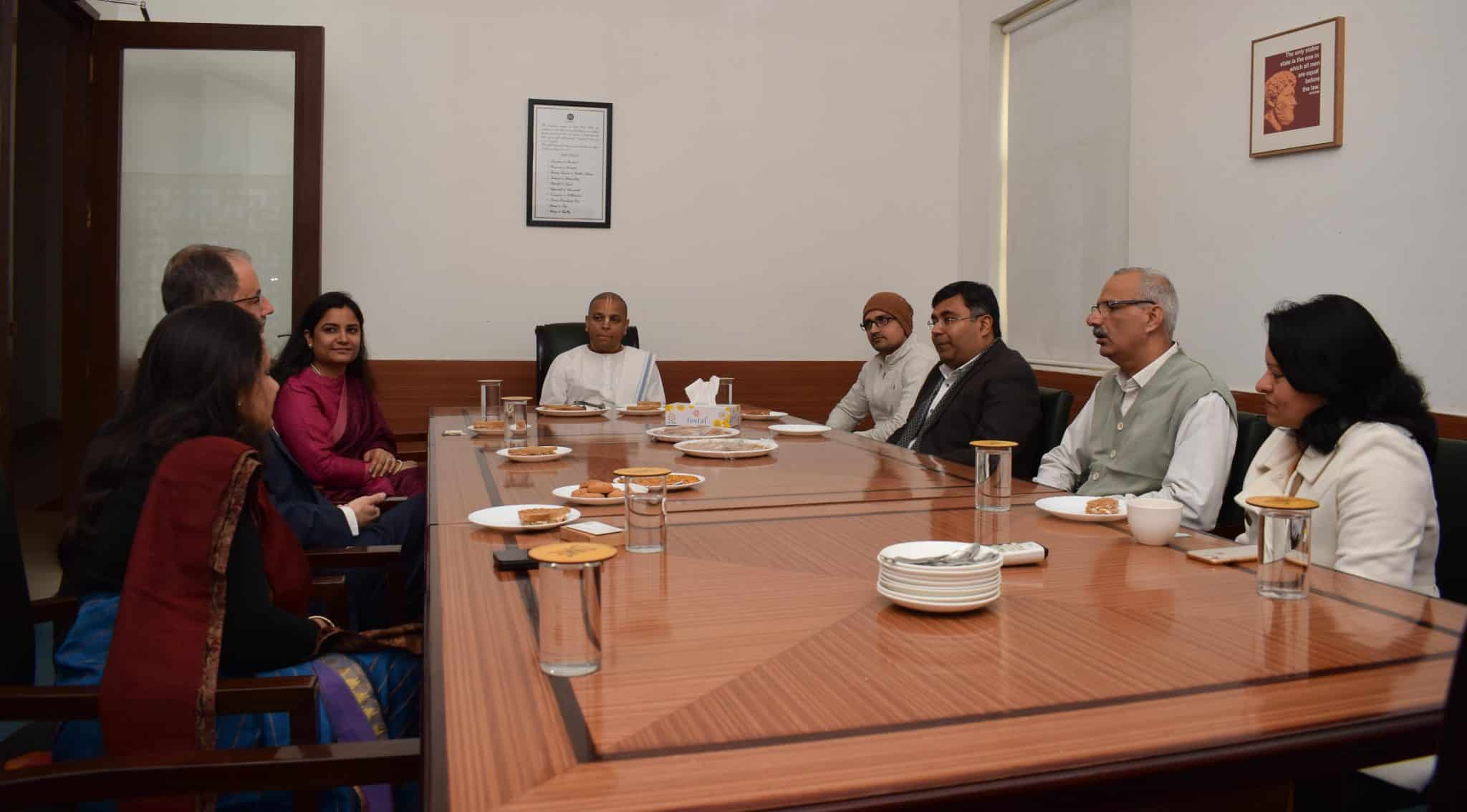

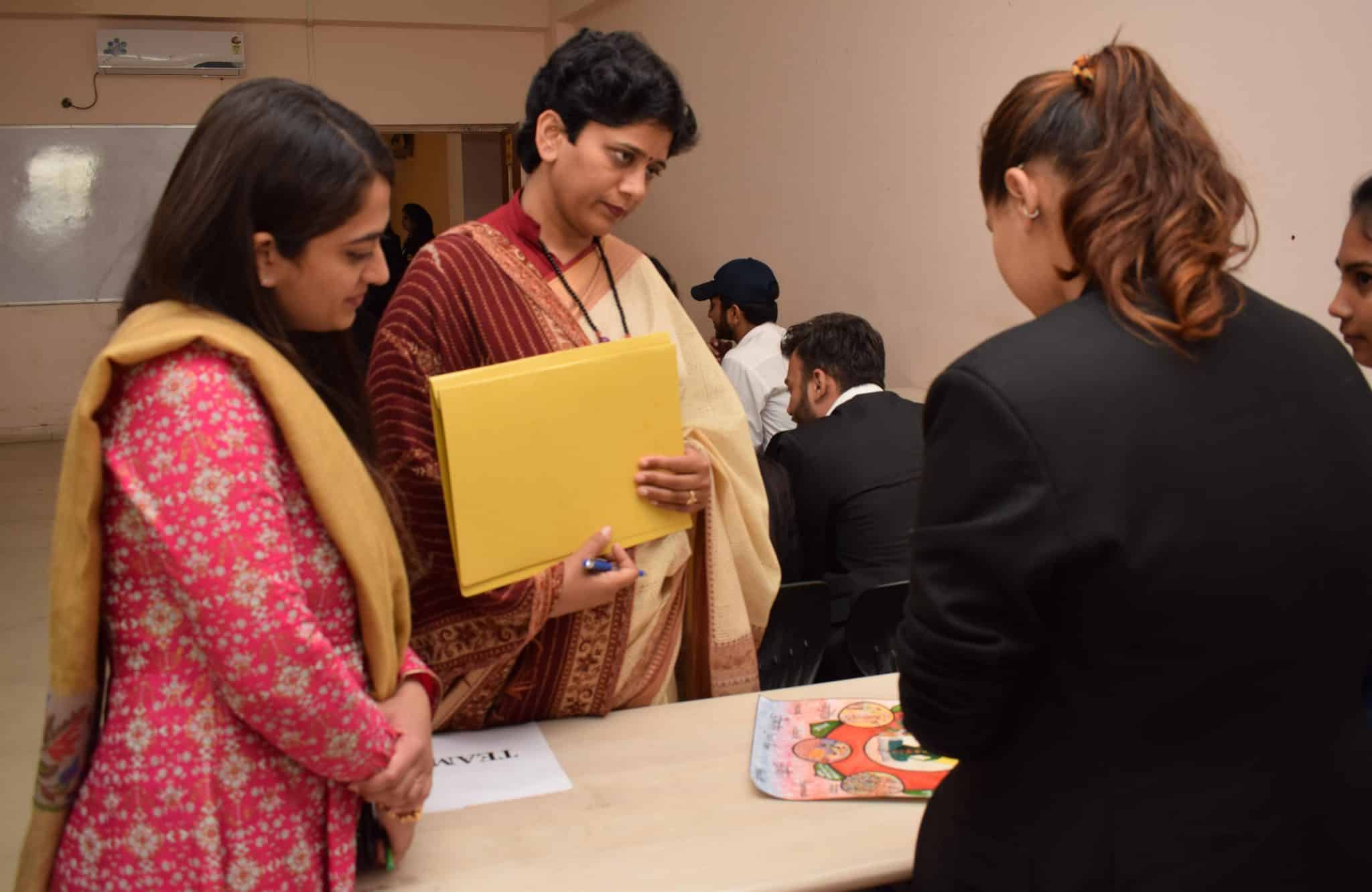


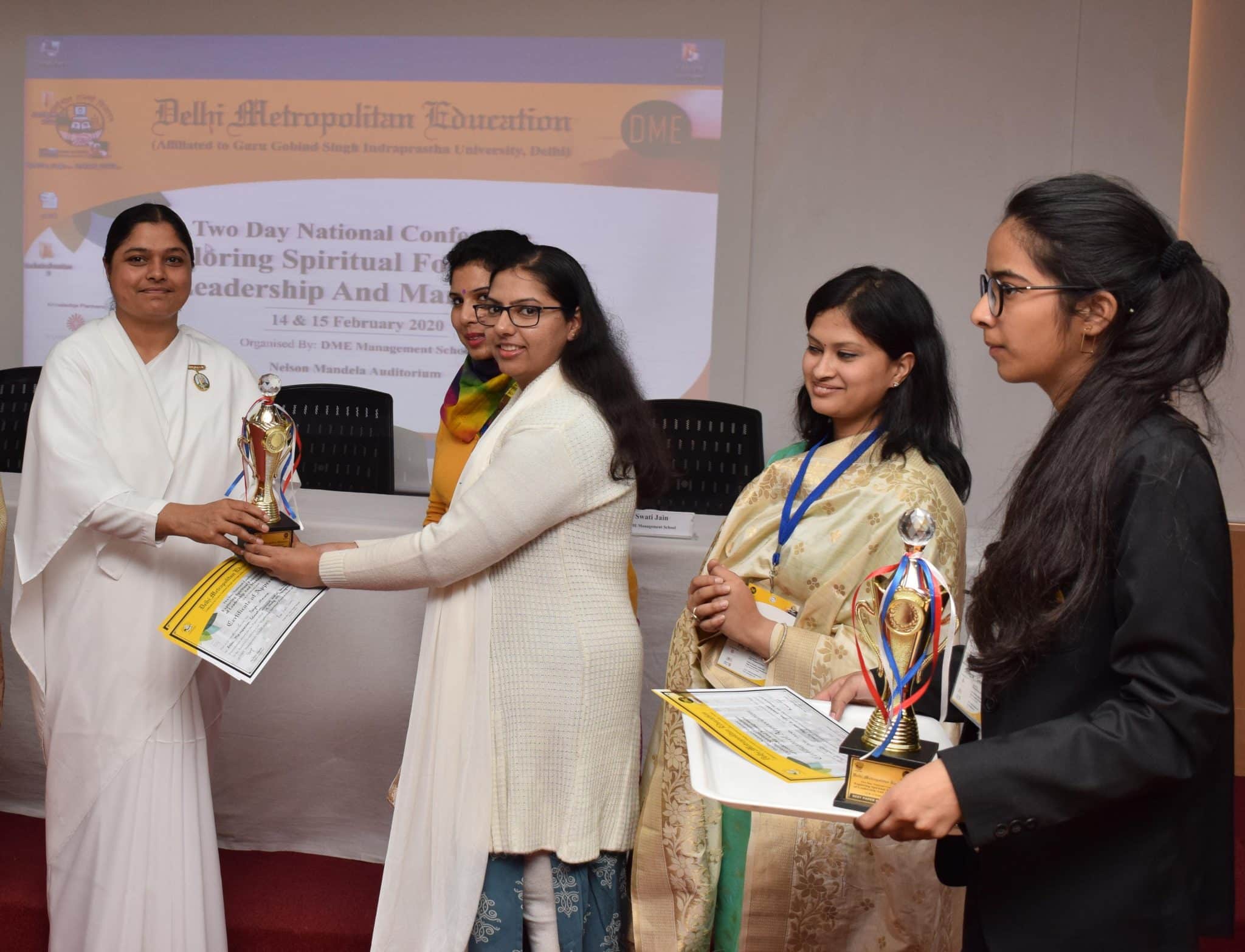
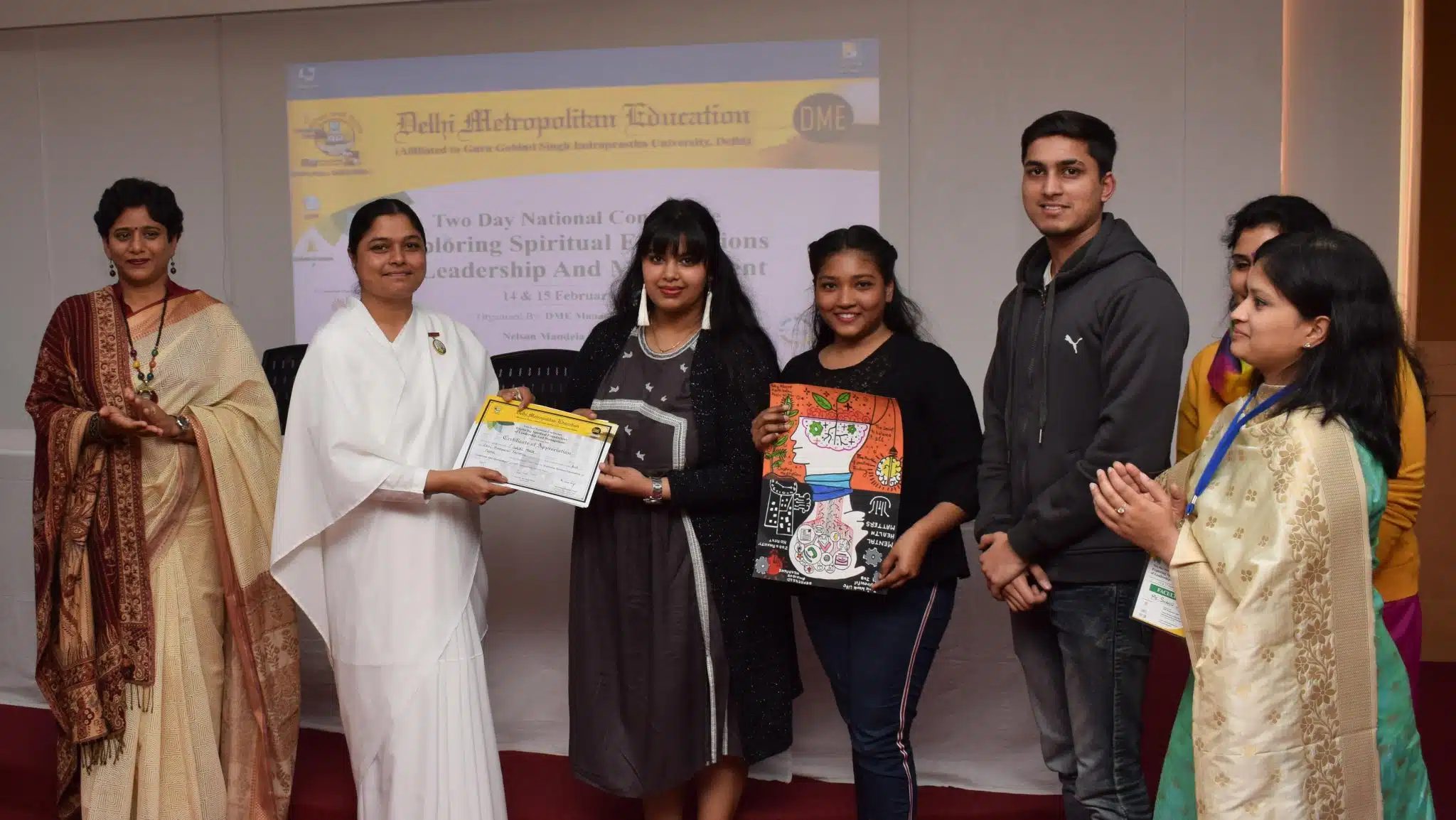

The IKS Cell actively organizes academic and cultural events in which students take active participation such as the Book Review Competition on Tagore Jayanti and the Iconic Strategist Business Presentation Contest in celebration of World Sanskrit Day. These initiatives encourage students to derive management and leadership lessons from the Ramayana, Mahabharata, and Bhagavad Gita, fostering ethical decision-making, strategic thinking, and value-based leadership aligned with Indian Knowledge Systems and NEP 2020.
The Value Added Course (VAC) on Design Thinking and Start-up Planning is a five-day intensive training program conducted at Delhi Metropolitan Education by DME Management School in association with Indian Institute of Management Indore. The program is designed exclusively for BBA First Year students to provide structured exposure to entrepreneurial thinking and innovation-driven problem-solving. This 30-hour comprehensive training focuses on developing creativity, analytical thinking, and start-up planning capabilities among students. The course integrates design thinking principles with practical business planning tools, enabling students to identify real-world problems, generate innovative solutions, and transform ideas into structured business models. Through interactive sessions, case-based discussions, team activities, and guided mentorship, students learn essential components of entrepreneurship including idea validation, customer discovery, value proposition design, market assessment, and basic financial planning. The program emphasizes experiential learning, encouraging students to collaborate, prototype solutions, and present structured start-up concepts. The VAC enhances students’ business acumen while strengthening skills such as leadership, critical thinking, communication, and strategic decision-making. By combining academic learning with practical application, the course plays a significant role in fostering an entrepreneurial mindset at an early stage of the BBA program.

 Have a Question?