

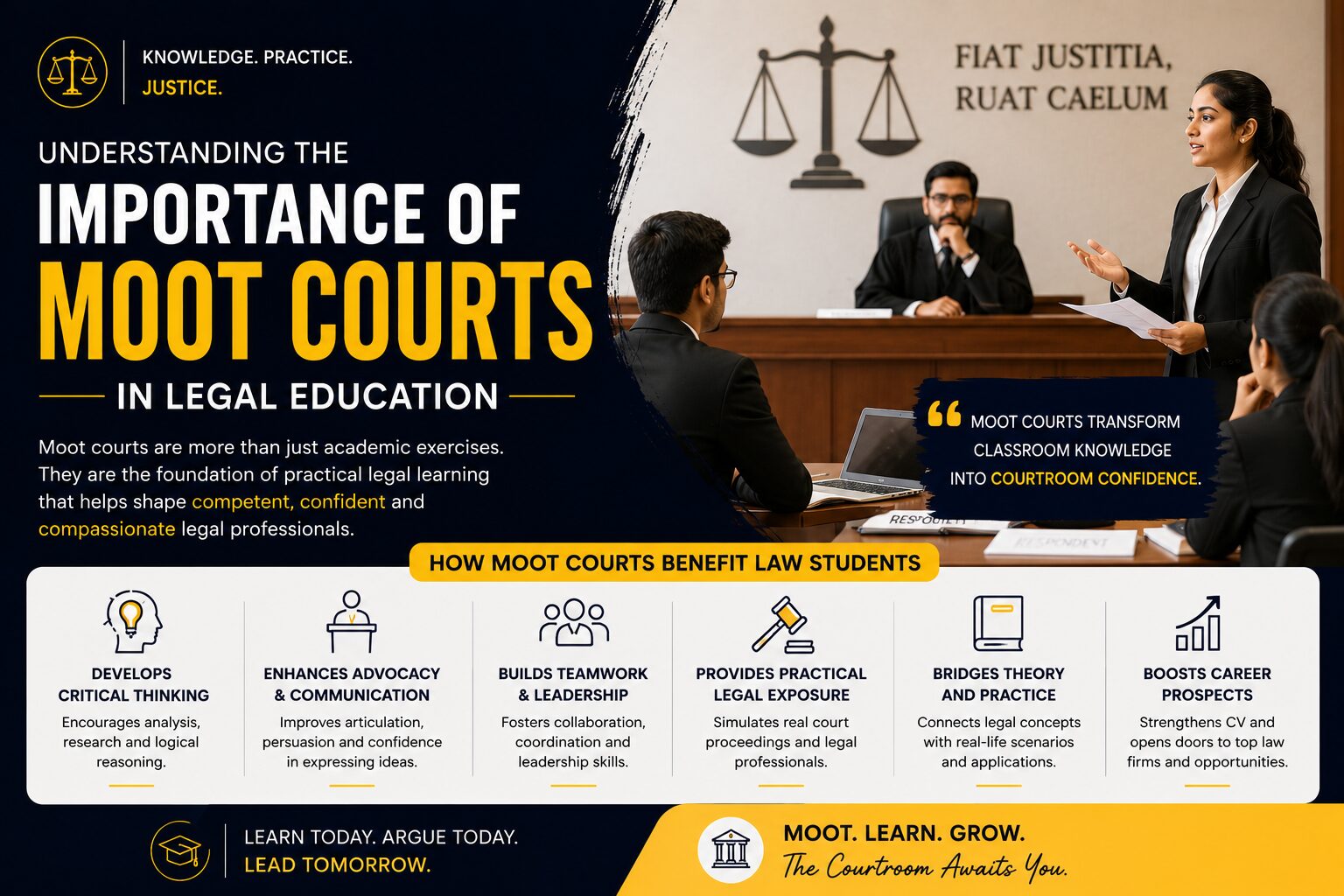
Imagine standing in a courtroom, presenting legal arguments before judges, responding to challenging questions, and defending your case using legal principles and precedents. For many law students, this experience begins long before entering a real courtroom—through moot court competitions.
In modern legal education, moot courts have become one of the most important practical learning tools for aspiring lawyers. They help students bridge the gap between theoretical legal knowledge and real-world courtroom practice.
As legal education becomes increasingly competitive and skill-oriented, students are looking beyond textbooks and classroom lectures. They want practical exposure, advocacy training, and professional confidence. This is why moot courts play such a significant role in shaping successful law careers.
Why Moot Courts Matter in Legal Education
Legal education is not only about learning laws and memorizing legal provisions. A successful legal professional must also know how to:
- Analyze legal issues
- Conduct legal research
- Present arguments effectively
- Think critically under pressure
- Communicate professionally
Moot courts help students develop these skills in a structured and practical environment.
Many students exploring Top IPU Colleges in Delhi NCR consider moot court opportunities while selecting a law college because they understand the importance of practical legal training.
Institutions with strong moot court culture often provide students with better professional preparation and confidence for future legal careers.
What Is a Moot Court?
A moot court is a simulated courtroom exercise where law students argue fictional legal cases before judges or legal experts.
The process usually involves:
- Researching legal issues
- Preparing written arguments
- Presenting oral submissions
- Responding to judges’ questions
Unlike regular classroom learning, moot courts allow students to experience legal proceedings in a practical setting.
Most modern Law school programs include moot court participation as an essential component of legal education.
Common Challenges Law Students Face Without Practical Exposure
Before understanding the benefits of moot courts, it is important to recognize the problems students face without practical training.
1. Lack of Courtroom Confidence
Many law students understand legal concepts theoretically but struggle with:
- Public speaking
- Argument presentation
- Professional communication
Without practice, students may feel nervous in real legal settings.
2. Difficulty Applying Legal Knowledge
Reading laws and applying them in practical scenarios are two different skills.
Students often struggle to:
- Interpret legal provisions
- Use precedents effectively
- Build structured legal arguments
3. Limited Research Skills
Legal professionals must conduct detailed research to support their arguments.
Without practical exposure, students may lack:
- Case analysis skills
- Citation techniques
- Research methodology
4. Lack of Exposure to Professional Legal Environment
Students without practical legal experience may struggle to understand:
- Courtroom etiquette
- Legal procedures
- Professional expectations
Moot courts help address all these challenges.
How Moot Courts Improve Legal Skills
Moot courts provide practical training that enhances both academic and professional abilities.
Develops Legal Research Skills
Research is one of the most important aspects of legal education.
During moot court preparation, students learn how to:
- Analyze case laws
- Interpret statutes
- Use legal databases
- Prepare legal arguments
This strengthens their analytical and research abilities.
Institutions encouraging legal research through moot courts help students build strong academic foundations.
Enhances Public Speaking and Communication
Moot courts require students to argue cases before judges.
This improves:
- Verbal communication
- Confidence
- Professional presentation
- Courtroom etiquette
Students become more comfortable expressing ideas clearly and professionally.
Builds Critical Thinking and Analytical Ability
Moot court cases often involve complex legal issues.
Students must:
- Evaluate facts carefully
- Analyze multiple perspectives
- Build logical arguments
These activities improve problem-solving and decision-making abilities.
Encourages Teamwork and Collaboration
Most moot court competitions involve team participation.
Students work together to:
- Conduct research
- Prepare written submissions
- Practice oral arguments
Participation in collaborative activities develops teamwork skills, similar to experiences gained through clubs & societies.
Provides Realistic Courtroom Exposure
Moot courts simulate real legal environments.
Students gain exposure to:
- Courtroom procedures
- Professional legal language
- Judicial questioning
This practical experience improves readiness for internships and legal careers.
Why Moot Courts Are Important for Career Development
Moot court participation has become an important factor in career preparation.
Improves Internship Opportunities
Law firms and legal organizations often prefer students with practical experience.
Students active in moot court competitions demonstrate:
- Legal research ability
- Advocacy skills
- Confidence and professionalism
These qualities improve internship opportunities.
Strengthens Resume and Professional Profile
Moot court achievements add significant value to resumes.
Participation reflects:
- Practical legal exposure
- Communication skills
- Analytical thinking
This can positively influence future placement opportunities.
Builds Networking Opportunities
Moot court events often involve:
- Judges
- Lawyers
- Legal scholars
- Industry experts
Interaction with legal professionals helps students build professional connections.
Sessions conducted by industry guests further improve exposure to legal practice and industry expectations.
Encourages Specialization in Legal Fields
Moot court topics may include:
- Constitutional law
- Corporate law
- Criminal law
- Intellectual property law
This exposure helps students identify areas of interest for future specialization.
Role of Moot Courts in Modern Law Schools
Modern legal education increasingly emphasizes practical training.
A well-developed Law school environment typically includes:
- Moot court halls
- Legal aid clinics
- Internship support
- Court visits
Strong academic infrastructure enhances practical legal learning.
Institutions investing in practical training facilities provide students with more comprehensive legal education.
Practical Learning Beyond Moot Courts
Moot courts are important, but they work best when combined with other practical learning opportunities.
Industry Interaction
Law colleges often invite industry guests such as:
- Advocates
- Judges
- Legal consultants
These sessions provide insights into legal practice and career opportunities.
Court and Institutional Visits
Participation in industry visits such as court visits helps students:
- Observe live proceedings
- Understand courtroom dynamics
- Learn professional conduct
These experiences reinforce classroom learning.
Value Added Courses for Law Students
Many institutions offer value added courses to improve practical legal skills.
Examples include:
- Legal drafting
- Contract writing
- Cyber law certifications
- Alternative dispute resolution training
These courses improve employability and professional readiness.
How Moot Courts Help Law Students
Consider two law students graduating from similar academic programs.
Student A Focuses Only on Theory
The student performs well academically but has limited practical exposure.
During interviews, they struggle with:
- Argument presentation
- Legal application
- Communication confidence
Student B Participates in Moot Courts
The second student actively participates in:
- Moot court competitions
- Legal research projects
- Internship programs
As a result, they develop:
- Better communication skills
- Strong analytical thinking
- Practical legal confidence
This often leads to stronger internship and placement opportunities.
Importance of Scholarships and Financial Support
Many students interested in legal education worry about educational expenses.
Several institutions offer scholarship opportunities based on:
- Academic performance
- Entrance exam scores
- Financial need
Scholarships help students access quality legal education and participate in additional learning activities.
Key Takeaways: Importance of Moot Courts in Legal Education
Here are the most important points students should remember:
- Moot courts bridge the gap between theory and practice
- They improve legal research and analytical skills
- Public speaking and courtroom confidence improve significantly
- Moot courts strengthen resumes and placement opportunities
- Practical legal exposure prepares students for real-world careers
- Strong law schools emphasize moot court participation and professional training
Moot courts are not just extracurricular activities—they are essential tools for professional legal development.
 Have a Question?