

For those who aim to become lawyers in India, it all begins with learning LLB (Bachelor of Laws). Delhi is one of the best cities in the country to understand the law. Delhi has some good colleges, very experienced teachers, and plenty of work opportunities after graduation.
In this blog, we will let you know how to do LLB in Delhi in simple language. You will be aware of the type of LLB courses, eligibility, entrance exams, admission process, etc.
What Is LLB?
LLB is a Bachelor of Legislative Law. It is a professional law degree that makes you a lawyer. You can practice law in courts, firms, or appear for exams like the judiciary and UPSC after LLB.
Types of LLB Courses in Delhi
You can study two types of LLB in Delhi NCR:
1. 5-Year Integrated LLB
This course is available to students who have cleared Class 12. This is a bachelor’s degree with a study of law. Some of the most popular courses are:
- BA LLB (Bachelor of Arts + LLB)
- BBA LLB (Bachelor of Business Administration + LLB)
2. 3-Year LLB
This same course is also available for those students who have already pursued a bachelor’s degree (e.g., BA, BCom, BSc, BBA, etc.). You can opt for a 3-year LLB after graduation.
Eligibility to Do LLB in Delhi
The following is the minimum requirement to do LLB in Delhi:
For 5-Year LLB:
- You have done Class 12 from a recognized board.
- Minimum marks: Generally 45% for general and 40% for SC/ST (some colleges might demand more).
For 3-Year LLB:
- You must have graduated from a good university.
- Minimum marks: Primarily 45% or above (varies with the college and category).
Entrance Tests for LLB in Delhi
For admission to good LLB colleges in Delhi, you may be required to clear an entrance test. Below are the most common entrance tests:
1. Common Law Admission Test(CLAT)
- For a 5-year LLB
- Conducted by the majority of India’s top law colleges
2. Common University Entrance Test(CUET)
- Admitted by some central universities
3. DU LLB Entrance Exam
- Organized by the University for 3 year LLB
4. IPU CET (Indraprastha University Common Entrance Test)
- For Private Law colleges of Guru Gobind Singh Indraprastha University
There may be a private entrance test in some private law colleges or they may admit the students based on their Class 12 or graduation merit.
Explore More – Top 7 Reasons Why Students Prefer DME for Law
Admission Process for LLB in Delhi
The process of admission is very simple. Here are the steps to be followed:
- Step 1: Select Your Course
Select whether you wish to study for a 5 year LLB or 3 year LLB.
- Step 2: Verify Eligibility
Make sure you are eligible on the basis of age and marks.Read the Latest LLB Admission News on the LawYogik website.
- Step 3: Fill out the Application for Test
Fill out the online test application form (e.g., CLAT or DU LLB).
- Step 4: Attend the Test
Come and sit for the test and wait for your result.
- Step 5: Counselling or Admission
According to your rank or score, you can choose the college.
- Step 6: Final Admission
Deposit the documents, pay the fee, and start your course.
Top Law Colleges in Delhi
There are many best LLB colleges in Delhi. There are government and private ones. These colleges give quality education, moot court practice, and placements.
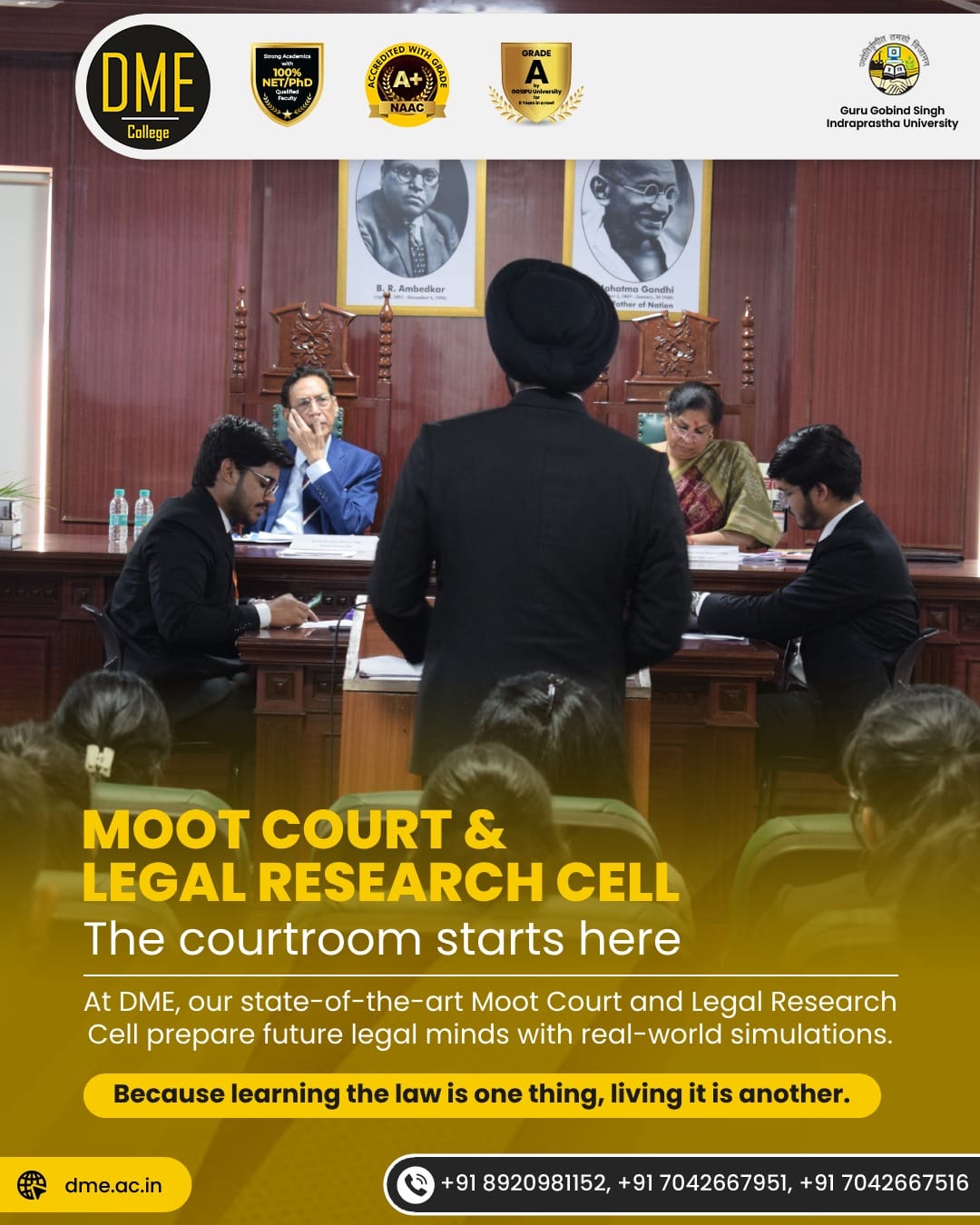
One of them is the renowned institution Delhi Metropolitan Education (DME), Noida, which is affiliated with Guru Gobind Singh Indraprastha University (GGSIPU), Delhi. It offers BA LLB and BBA LLB courses with special focus on quality education, legal research, and practice training.
What You Will Study in LLB
During your LLB course, you will study a lot of interesting topics in law. Some of them include:
- Indian Constitution
- Criminal Law
- Contract Law
- Family Law
- Environmental Law
- Labour Law
- Property Law
- Legal Writing and Research
- Moot Court and Internship
These subjects familiarize you with the Indian legal system and practical application of the law.
Career Options After LLB
After pursuing LLB in Delhi, you will have ample job opportunities:
- Become a Lawyer: Get registered with the Bar Council of India and start practicing in court.
- Legal Work in Law Firms: Become private law firms’ legal associates.
- Corporate Legal Advisor: Help firms in managing their legal work.
- Judiciary: Prepare judicial services exams and become a judge.
- Government Jobs: Offer UPSC, SSC, and other government exams.
- Higher Studies: Do LLM or special courses like Cyber Law, Intellectual Property Law, etc.
Also See: Why Delhi is the Place for Your LLM Studies
Skills You Will Gain in LLB
While studying LLB, you’ll also gain some actually very helpful skills like:
- Public speaking
- Critical thinking
- Legal writing
- Problem-solving
- Research skills
- Teamwork and leadership
All of these skills will help you not just in the legal sector but also in practically any other sector.
Final Words
LLB in Delhi can be a great stepping stone towards a prosperous future. Delhi offers a perfect blend of good colleges, quality education, and exposure to real legal cases. If you want to become a lawyer, judge, legal officer, or advisor, LLB is perfect for you.
Make sure you cross-check every fact, prepare for entrance tests, and choose a good college that gives you knowledge as well as experience.
Colleges such as Delhi Metropolitan Education (DME), affiliated under IP University, give you formally structured LLB courses with modern infrastructure, effective teachers, and internships.
So start now. Law is not a subject—it is a very effective tool to bring change into society.
 Have a Question?